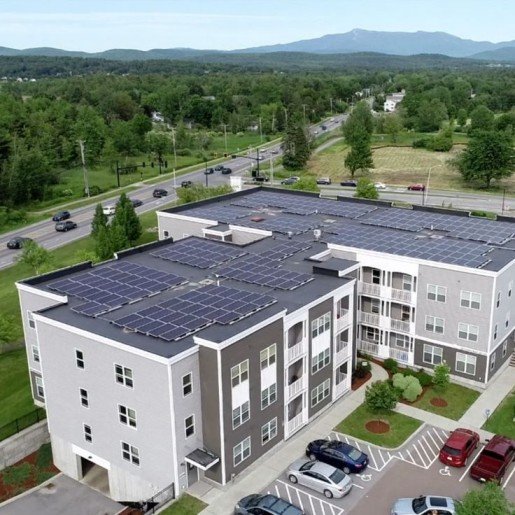
Apartment buildings use electricity every day for lifts, corridor lighting, water pumps, security systems and other shared facilities. These common-area expenses can add up significantly, particularly in larger residential complexes.But what if an apartment society could use its unused rooftop space to generate some of the electricity it needs?Installing solar panels for apartment buildings offers an effective solution to manage shared utility bills. With rooftop solar technology and suitable grid-connection arrangements, housing societies in Kolkata can explore clean energy for common facilities, helping residential communities cut ongoing maintenance costs while becoming more energy-conscious.
Here is what apartment owners and housing associations should understand before planning a shared rooftop solar project.
1. How Does Shared Rooftop Solar Work in an Apartment Building?
Unlike an individual rooftop installation for one flat, a shared solar system is designed to supply electricity for common facilities across a residential complex.
Solar panels are installed on a suitable common rooftop. The electricity generated can be used for shared loads such as:
-
Lifts and elevators.
-
Corridor and staircase lighting.
-
Water pumps and motors.
-
Security systems and common-area lighting.
-
Community halls and other shared facilities.
The system’s configuration depends on the society’s electrical infrastructure, common-area meter and applicable electricity regulations.
A properly planned installation can help reduce the amount of electricity that the society needs to purchase from the grid.
2. Why Should Housing Societies in Kolkata Consider Solar?
Kolkata’s residential complexes often have substantial rooftop areas that may be suitable for solar installations. Instead of leaving this space unused, societies can assess whether it can support a rooftop solar project.
Some potential benefits include:
Lower common-area electricity expenses: Solar generation can offset a portion of the electricity consumed by shared facilities, depending on system capacity and consumption patterns.
Better use of rooftop space: Suitable rooftops can become productive energy-generating assets.
Long-term energy planning: Solar panels can help societies manage part of their electricity requirements over the system’s operating life.
Environmental benefits: Generating electricity from sunlight can reduce dependence on conventional grid electricity and help lower associated emissions.
Support for electric vehicle charging: Housing societies planning EV charging facilities can consider solar generation as part of their broader energy strategy.
3. Is Your Apartment Rooftop Suitable for Solar Installation?
Not every rooftop is automatically suitable for solar panels. A professional site assessment is important before deciding on installation capacity.
Key factors include:
-
Available space: Identify the usable, shadow-free rooftop area.
-
Structural strength: Check whether the roof can safely support the installation.
-
Sunlight exposure: Nearby buildings, water tanks and other structures can create shadows.
-
Electrical infrastructure: Assess the common-area meter, sanctioned load and existing distribution system.
-
Maintenance access: Keep adequate space for cleaning, inspection and repairs.
For apartment buildings in Kolkata, structural assessment and shading analysis are particularly important because neighbouring buildings and rooftop structures can affect solar generation.
4. What Is the PM Surya Ghar Scheme for Housing Societies?
An important consideration for residential communities is the PM Surya Ghar: Muft Bijli Yojana.
The scheme includes provisions for Group Housing Societies (GHS), Resident Welfare Associations (RWAs), Apartment Owners Associations and cooperative housing societies to install rooftop solar systems for common facilities, including EV charging.
The central financial assistance provision for eligible group housing societies and RWAs is ₹18,000 per kW, subject to scheme conditions, with support for common facilities up to 500 kW capacity at 3 kW per house.
However, societies should not assume that every installation automatically qualifies. Eligibility, capacity limits, application procedures and technical approvals must be checked against the latest scheme guidelines.
Before making a financial decision, the association should also confirm the applicable arrangements with its electricity distribution company.
5. How Much Solar Capacity Does an Apartment Society Need?
The right solar plant capacity depends on the electricity consumption of the building’s common facilities.
For example, a society with high electricity consumption from lifts, pumps and common lighting may require a larger system than a smaller residential building.
A practical planning process includes:
-
Reviewing 6–12 months of common-area electricity bills.
-
Identifying average monthly electricity consumption.
-
Understanding daytime and nighttime electricity requirements.
-
Measuring usable rooftop space.
-
Evaluating electrical infrastructure and grid connectivity.
-
Estimating solar generation and financial returns.
A professional assessment can help determine whether a 10 kW, 25 kW, 50 kW or larger installation is appropriate.
The objective should be to match solar generation with actual electricity demand rather than simply installing the largest possible system.
6. What Should an Apartment Association Check Before Installation?
Before proceeding with a housing society solar installation, the managing committee should consider several practical matters.
Discuss the project with residents: Explain the expected benefits, installation process, costs and responsibilities.
Review the financial plan: Compare installation quotations, expected generation, maintenance expenses and estimated savings.
Check electricity regulations: West Bengal has specific grid-interactive rooftop solar regulations. Confirm the applicable net-metering, net-billing or gross-metering arrangements with the relevant distribution company.
Choose suitable equipment: Evaluate solar modules, inverters, mounting structures, safety systems and warranties.
Plan ongoing maintenance: Establish responsibility for cleaning, inspections, monitoring and repairs.
A transparent decision-making process helps residents understand the project and supports smoother implementation.
Make Your Apartment Building Solar-Ready with Bengal Solar
Shared rooftop solar can be a practical step towards better energy management for residential communities. However, every apartment complex has different electricity requirements, rooftop conditions and installation challenges.
At Bengal Solar, the journey towards solar energy begins with understanding your property’s requirements and identifying a suitable rooftop solar solution.
Whether your society wants to reduce common-area electricity expenses or explore solar-powered EV charging, proper planning can make a significant difference.
Thinking about installing solar panels in your apartment building in Kolkata? Contact Bengal Solar to discuss your rooftop space, electricity requirements and potential solar installation options.
Frequently Asked Questions (FAQs)
1. Can an apartment society install solar panels in Kolkata?
Yes. Eligible housing societies and apartment associations can explore shared rooftop solar installations for common facilities, subject to technical feasibility and applicable electricity regulations.
2. Can solar panels power apartment lifts and water pumps?
Yes. A suitably designed system can supply electricity to common facilities such as lifts, water pumps and corridor lighting, depending on their electrical requirements and solar generation.
3. Is there a government subsidy for housing society solar installations?
The PM Surya Ghar scheme provides financial assistance for eligible group housing societies and RWAs installing solar for common facilities. The current provision is ₹18,000 per kW, subject to applicable conditions and capacity limits.
4. Does an apartment building need a separate solar meter?
Metering arrangements depend on the building’s electrical connection, system design and applicable distribution-company regulations. A technical assessment is necessary.
5. How long does an apartment rooftop solar system last?
Solar panels are generally designed for long-term operation, often around 25 years or more. Actual performance depends on product quality, installation standards, environmental conditions and maintenance.